Into the wild North Nordskills workshops aim to pilot and refine self-sufficiency skills based educational modules with a focus on (wild) food and other use-products that can be gathered from Nordic nature.
This includes foraging from Nordic nature such as collecting berries, mushroom or herbes but also includes the use of other natural materials as well as fishing skills. While the overall focus is on products from ‘wild’ nature this nordskills component also includes processing and handling of farmed food products into consideration as the the self-sufficiency skills required for handling wild and self-farmed food/products do no differ to a large extend.
Below you can have a look at some examples of ‘Into the wild north’ Nordskills workshops carried out in the project by our partners.

Fish handling workshop, Malax
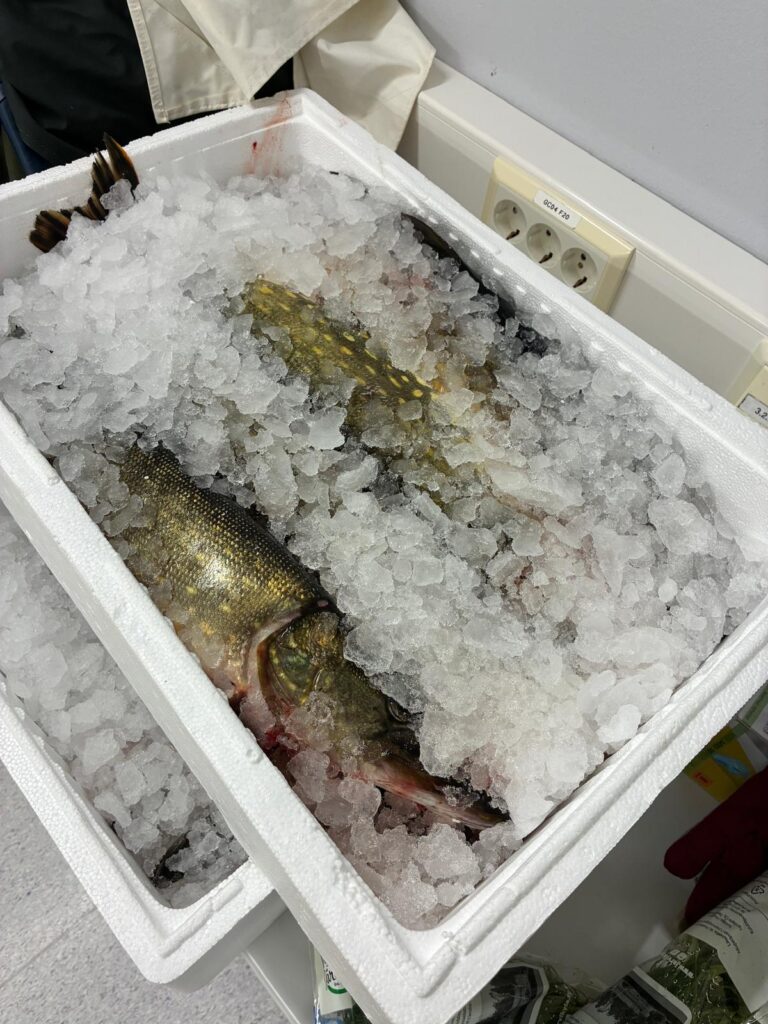
A Fish preparation workshop was carried out with 7th graders from Mallax. First students were provided with a lecture introducing the Smart Fish concept, focusing on why it is important to use and eat local, underutilized fish species such as pike. The session highlighted sustainability, reduced environmental impact, and the value of local food systems.
Students were then guided through the practical steps of gutting, filleting, and removing the Y-bones from pike, as well as how to handle and clean fish roe. Basic cooking techniques and suitable flavor pairings were also discussed.
Each seventh-grade student received one pike and practiced cleaning, filleting, and removing the Y-bones themselves. The class was divided into four groups, and each group prepared a different dish using pike. This allowed all students to taste four different meals and explore the versatility of pike as a local and sustainable food resource.
Fermented food and mussels tasting
The workshop started with a focus on Finnish food traditions, focusing on key local ingredients such as rye, caraway, and potatoes, and discussing which foods Finland is more or less self-sufficient in. Students also learned about fermented foods and their importance for preservation, nutrition, and cultural heritage.
Freshwater mussels were introduced as a potential future resource. Since Finland does not have a strong tradition of using mussels from its inland waters, the discussion highlighted why we are working with them and how species like freshwater mussels could become part of a modern, local, and sustainable Finnish food culture.
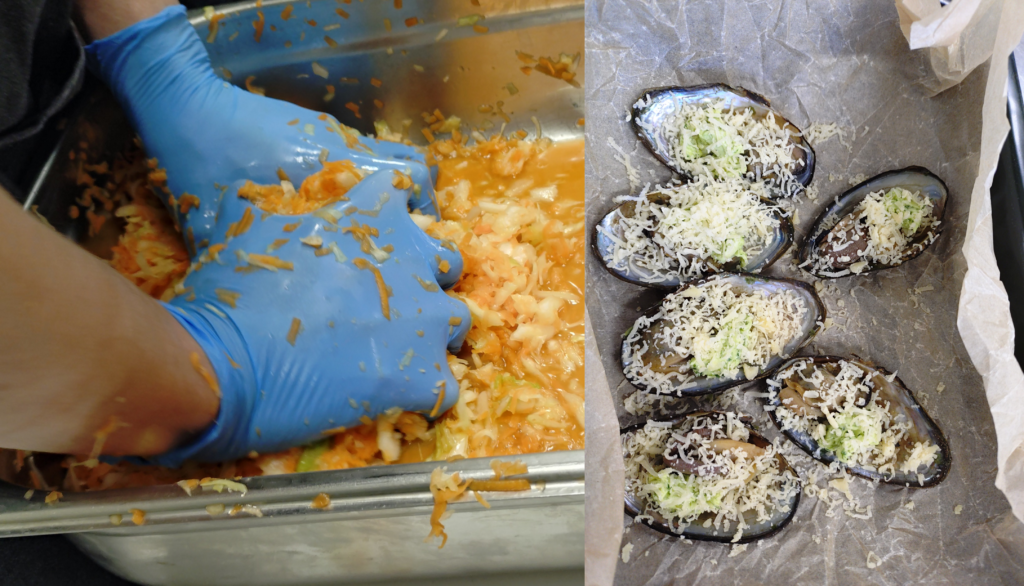
In the practical part students prepared sauerkraut with carrots in groups. Each group received about 1 kg of carrots and 1 kg of white cabbage, which they shredded, mixed with salt, and packed into 2-liter jars. They could choose to season their sauerkraut with caraway, fennel, garlic, or ginger.
They also tasted fermented beans and cucumbers to explore different fermentation flavors. In addition, the students prepared mussels that had been pre-cooked, and each group gratinated them with cheese and herb butter, combining fermentation knowledge with practical cooking skills.