Nordskills eco-club at Umeå Nature school
The Eco club in Umeå is the Nature School, founded in 1991 and a part of the pre- and compulsory school administration. The Nature school support leaders, educators and students in education for sustainable development, often using outdoor didactics as a working method. The activities are performed as skills development for teachers, often together with the students at their own school and neighborhood i.e. often outreach activities but sometimes as training courses at the Nature school Eco club.
Below you can find stories of some of the activities of Umeå eco-club:
Visit to an animal farm - about life as a farmer
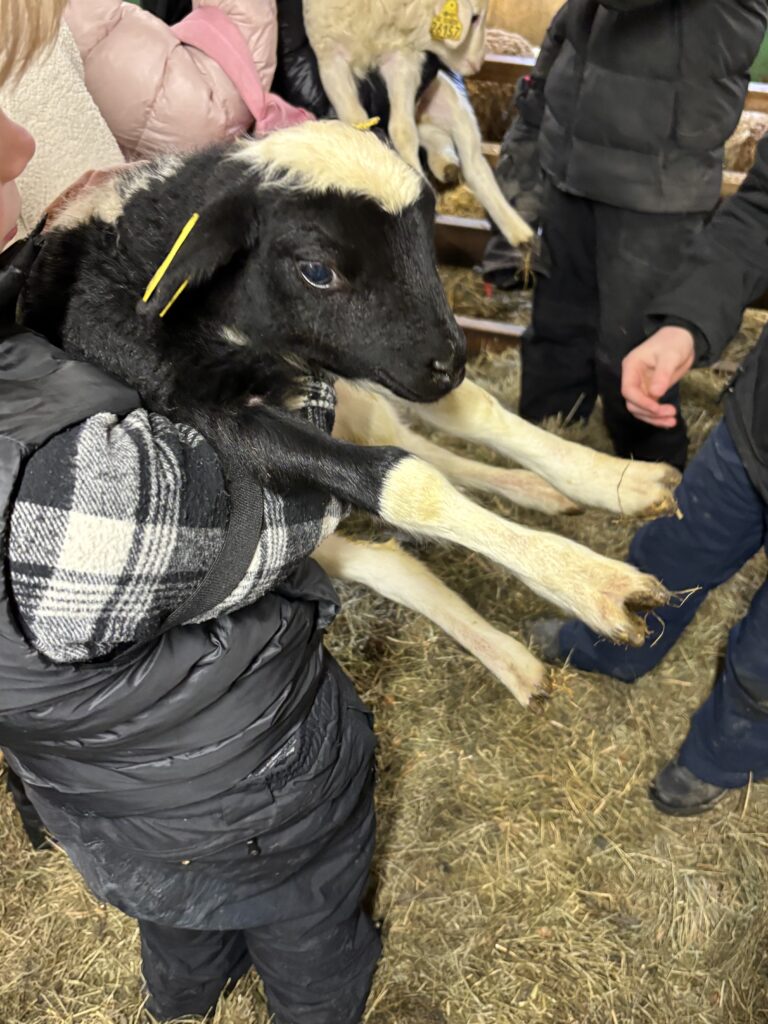
Two classes from Kasamark School in Umeå visited Häljegård this week – a visitor farm with mainly sheep and cattle. Kristina, the expert who started the business, lives on the farm and we were guided by her and her son Harry, who is truly passionate about his animals. The sheep had just lambed and the students got to hold the lambs and compare the weight at different ages and see where the milk comes from. Lamb burgers were served for lunch and we also had time to do an exercise that highlighted the sheep’s need for food, water and shelter. The visits ended with reflection and a question and answer session: why is this important to know?
Surviving in winter - about clothing, energy and protection
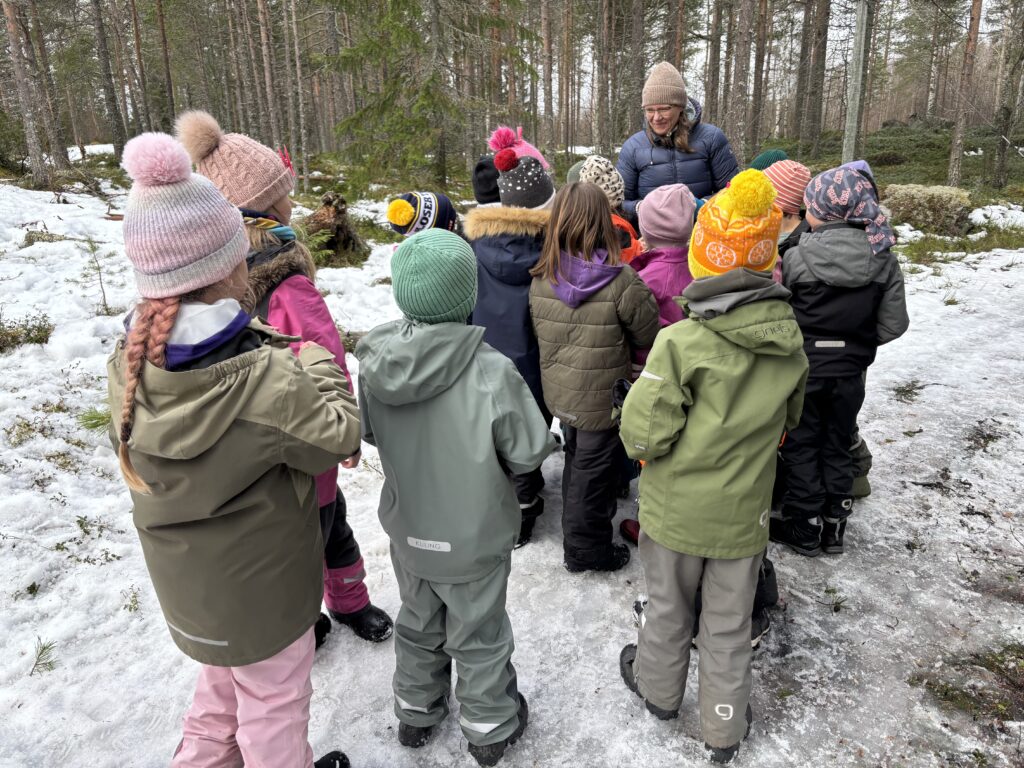
While the older kids went to the animal farm year 1 worked in nature with a focus on how to survive in winter. How to dress, what animals do to survive and what is needed in the form of food and shelter.
Fire and cooking outdoors - about techniques and edibles in nature
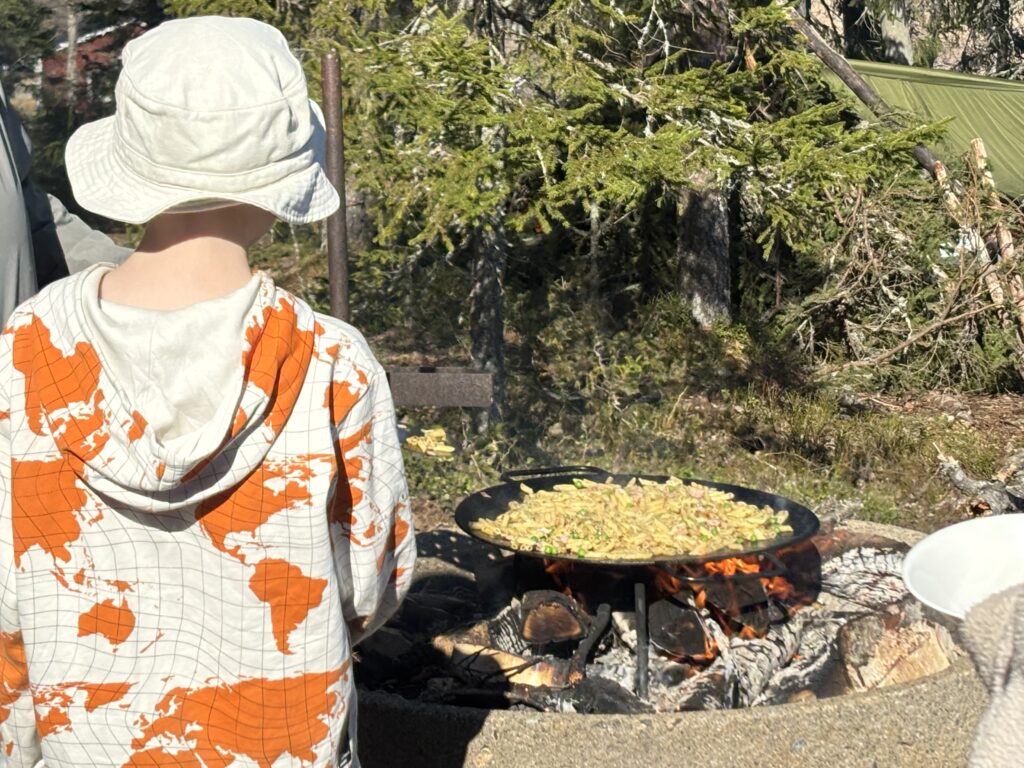
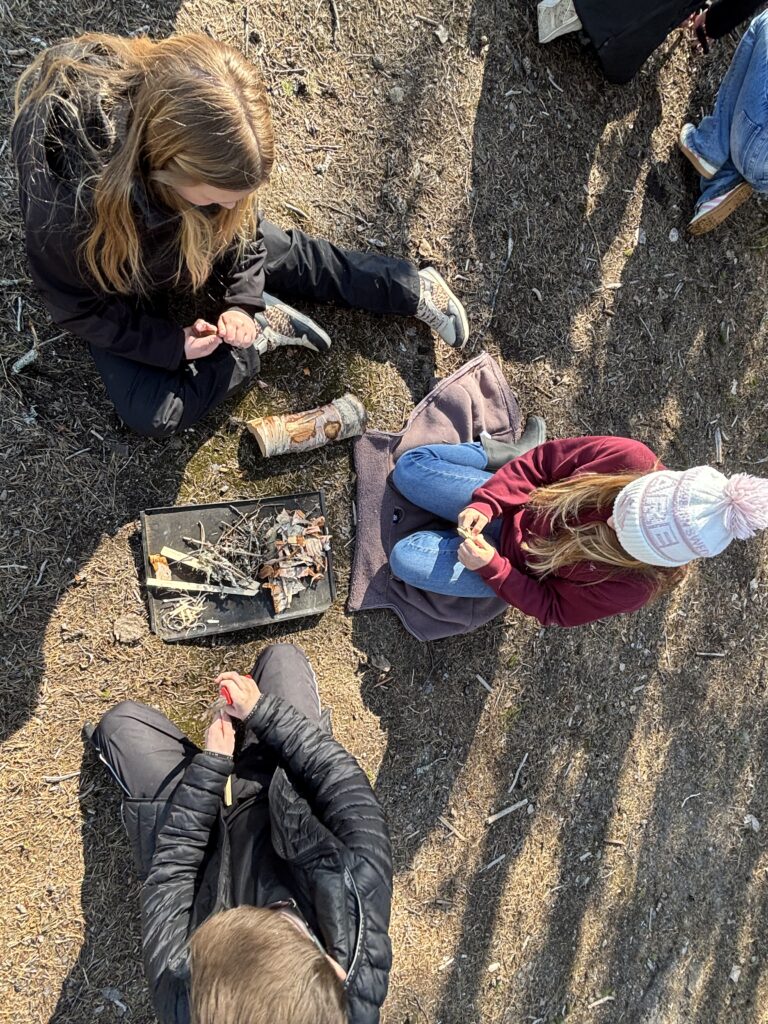
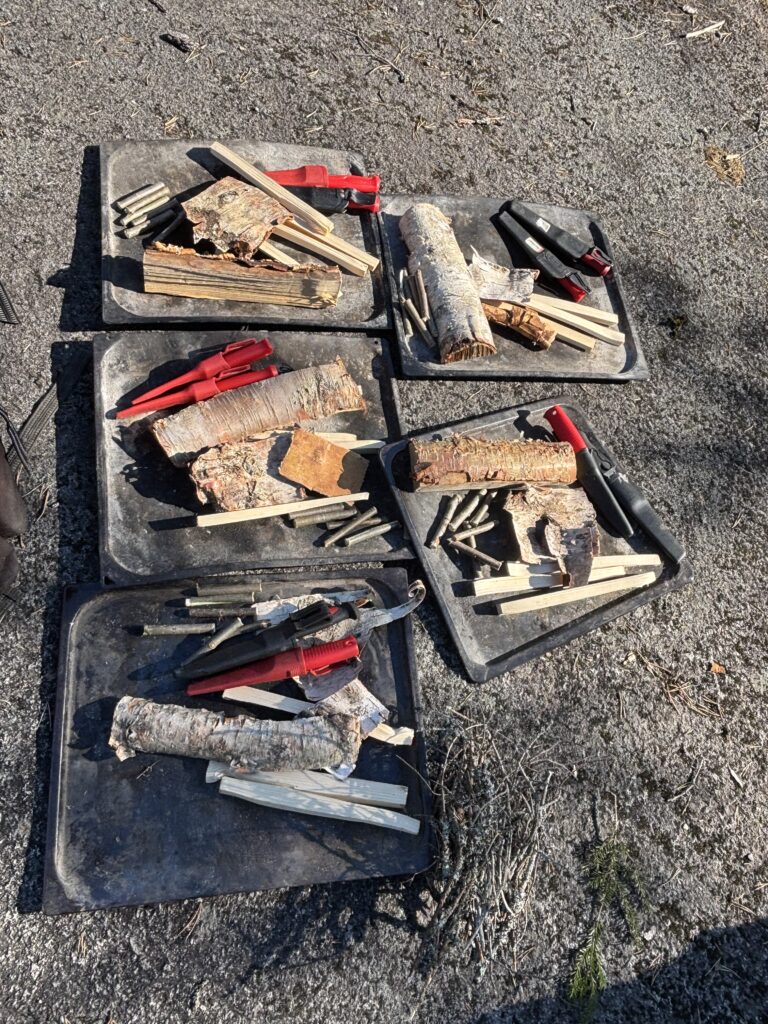
An exciting theme for the students as handling both a knife and fire is included. The students get to practice making fire with the materials that nature offers and to light we use fire steel. The knife is needed to tension needles, and this step is preceded by a knife course with focus on safety. An exercise is included that involves understanding what a fire needs to “survive”. The students get to practice setting up a storm kitchen and knots to be able to attach a tarp as protection from both sun and rain. Cooking on murikka is included and tea on lingonberry leaves and pine bark is available for those who want it. A theme filled with cooperation, participation and challenges.
Crafts - traditional materials and methods
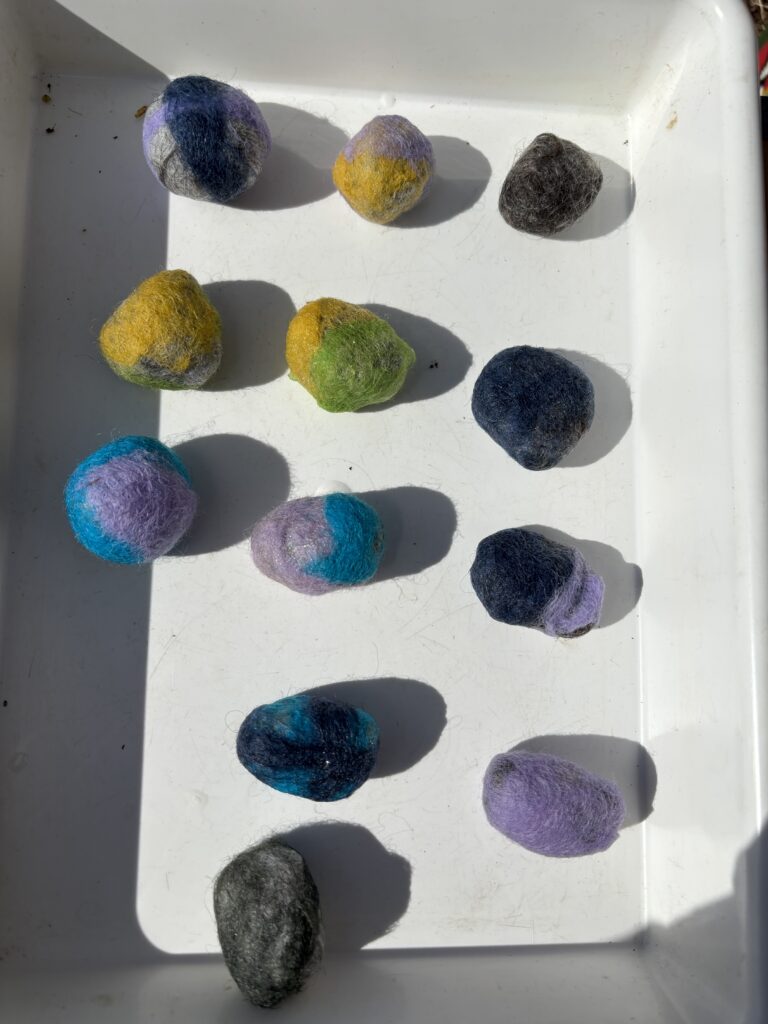
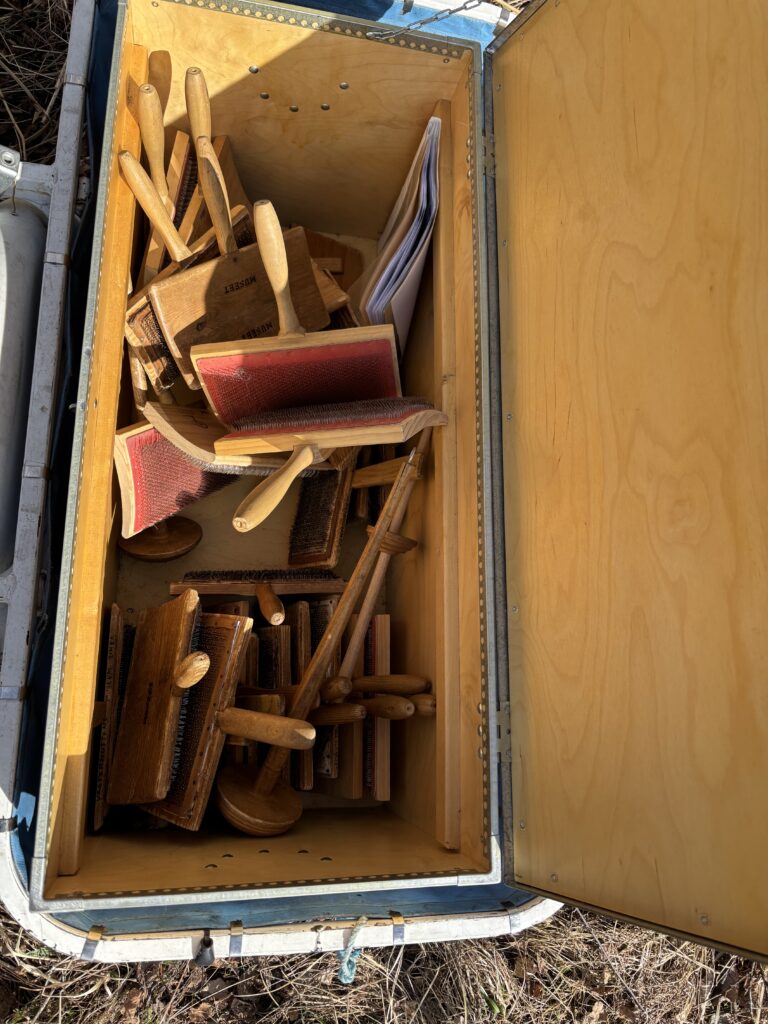
In this theme, we offer 4 activities that are all linked to local traditions and materials. The students get to make objects from clay, card and felt sheep’s wool, braid a sustainable rope, a so-called whip braid, and practice making knots that are important for practical use. The students work in small groups and there is also time for discussions about how the techniques were used in the past and how the knowledge may be necessary in the future.
Life in water - local fishing and water as resource
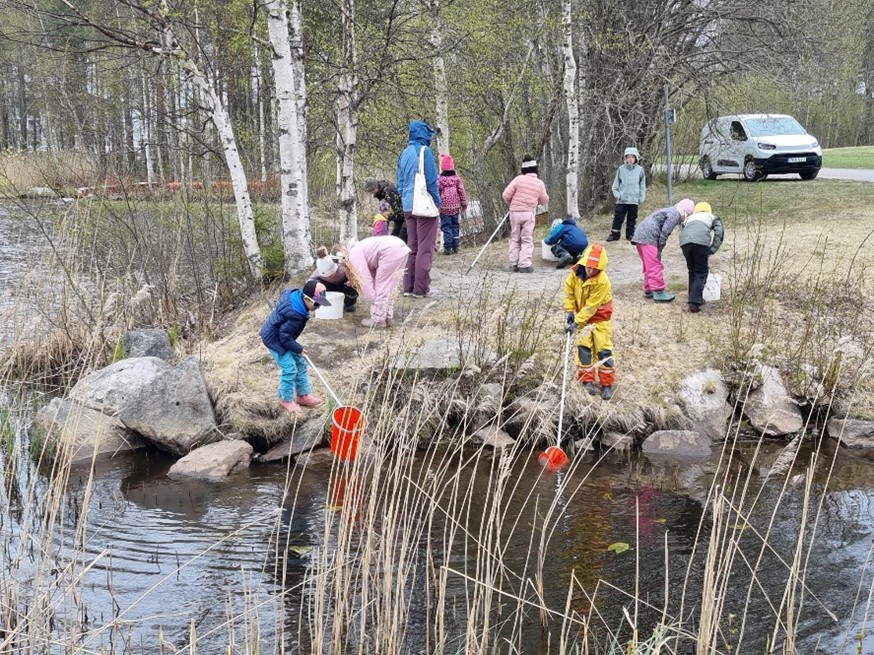
In this activity Umeå Nordskills eco-club students investigate water – partly as a vital resource for us humans but also as a habitat for our food. As an introduction, students get to see different examples of fishing gear and learn about the fish species found in our latitudes, both in fresh and brackish water. The students got to try fishing with homemade fishing rods, learned how to clean and cook a fish and what is required for the fish to survive and reproduce. We investigate small insects in water, what importance they have as food for the fish and how the small insects can function as environmental indicators and give us guidance on the quality of the water.
Salmon and herring (unfortunately not self-caught this time) were cleaned, cooked on the fire and the students got to taste it – a nice example of the food chain.
Cultivation, harvesting and processing
Since growing edible crops is an important goal in the project, the schools have received extra knowledge and support in that area together with the Nature School Eco club.
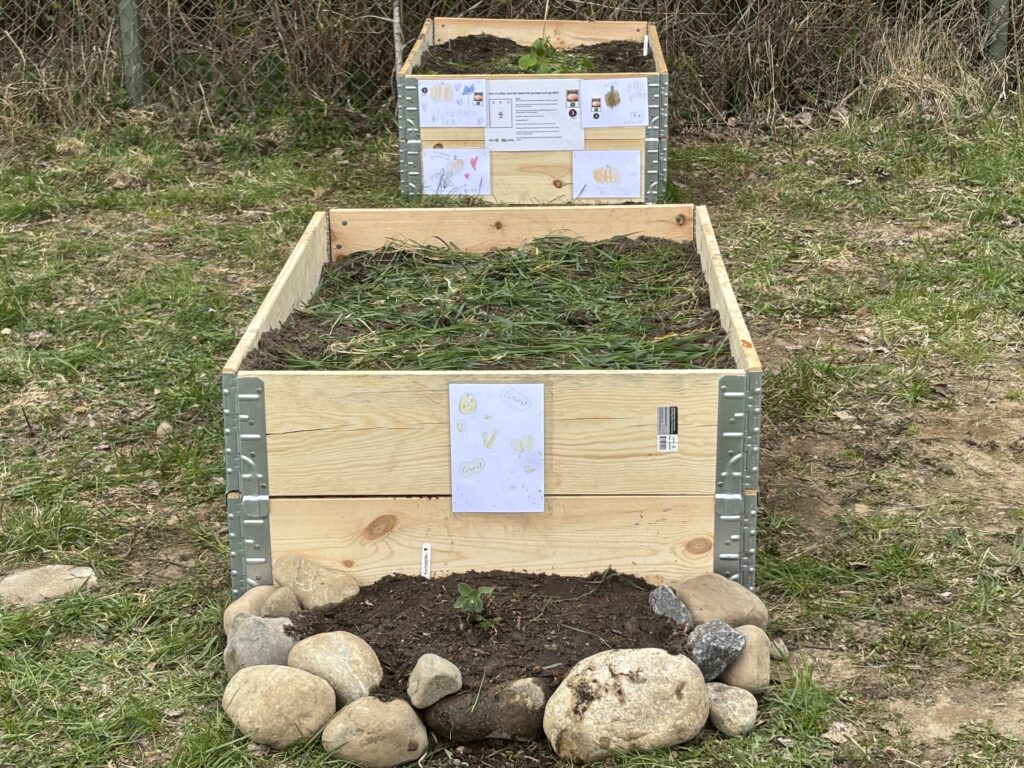
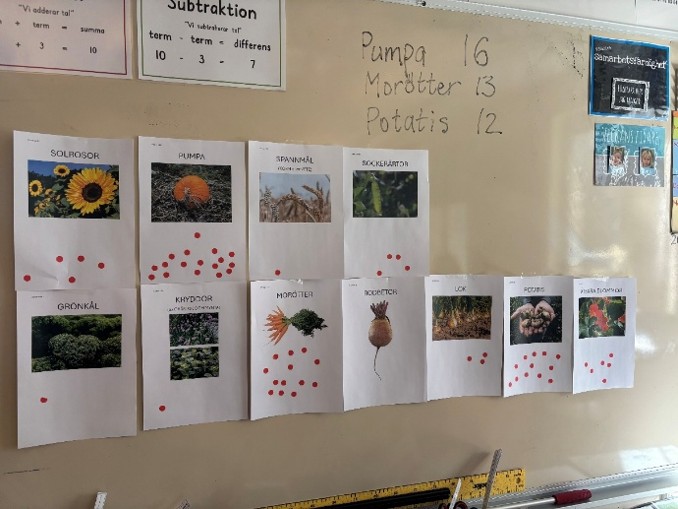
In all classes, work has begun on growing crops in the schoolyard. Students and teachers have participated in a lesson on what a seed is, how photosynthesis works and how soil is made. A big amount of edible crops, suitable for the climate have been offered and students in each class have been allowed to vote for their favorites. The schools have received pallet collars, soil, seeds, etc. and have started to grow crops in the classroom. Before the summer, the plants will be planted out and seeds sown, and in the fall, the schools will arrange a harvest party and prepare the crops in collaboration with the schools’ catering staff.
Here are examples from the poll, and in this class, pumpkin, carrots, and potatoes were at the top and the first growing plants.
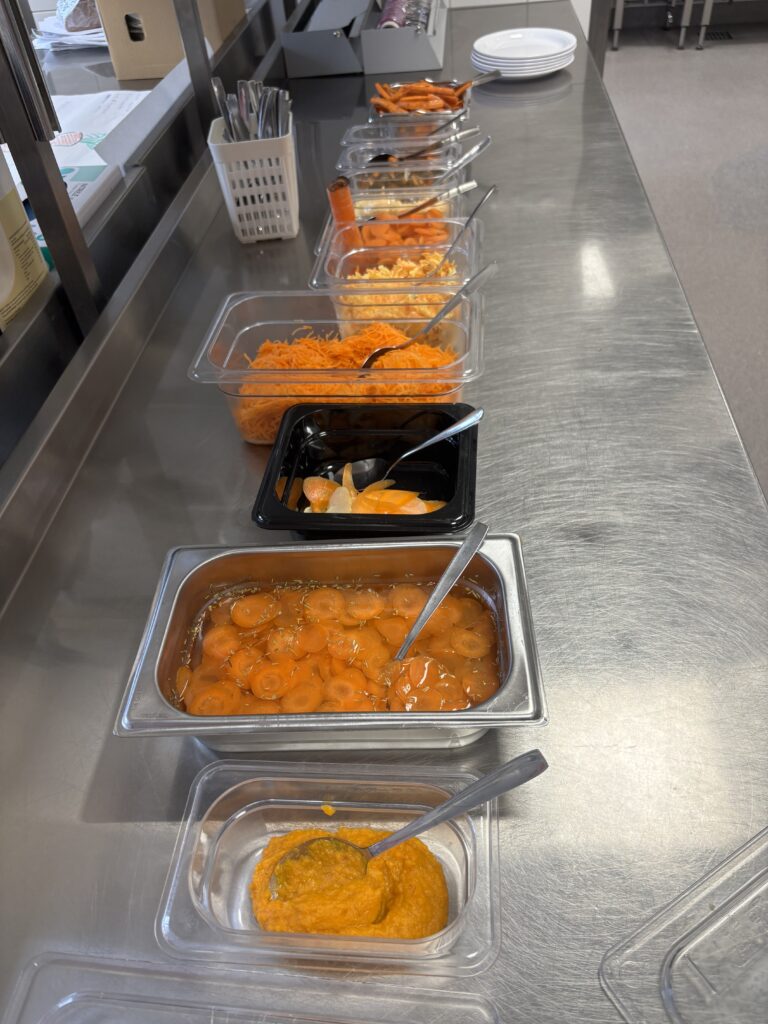
Meal service staff were offered a workshop on the theme of carrots. Why is carrots an important food in terms of climate impact and nutritional content? How many different ways are there to prepare and present carrots in 45 minutes? The result was absolutely fantastic!
Served here roasted carrots, carrot tzatziki, carrot cut-out flowers, carrot chips. boiled carrots, grated carrots, carrot and apple salad, coleslaw, carrot cream, crudité, pickled carrots and carrot sticks.